

Defending Your Rights and Protecting Your Future After a DWI Charge.
Why You Need a DWI Attorney Springfield, MO
A DWI charge in Springfield, MO threatens your driver’s license, your job, and your freedom.
Under Missouri law, driving while intoxicated means operating a vehicle with a blood alcohol concentration (BAC) of 0.08% or higher—or being impaired by alcohol or drugs to the point where you cannot drive safely. Missouri uses the term DWI exclusively; you will not see DUI on any charging documents here.
At Carver & Associates, our Springfield DWI lawyers have defended clients in Greene County courts for over 45 years. We challenge traffic stops, question breath test accuracy, and negotiate reduced charges—all while protecting what matters most to you. If you were arrested last night or last month, we are ready to fight for the best possible outcome.
What Constitutes a DWI in Springfield, MO?
Missouri law treats all impaired driving offenses under one statute—DWI.
You can be charged if you drive with a BAC at or above 0.08%, if alcohol or drugs impair your ability to operate a vehicle safely, or if any controlled substance is detected in your system. Unlike other states that distinguish between DUI and DWI, Missouri prosecutes every impaired driving case as a DWI.
The severity of your charge depends on factors like prior offenses, your BAC level at arrest, whether an accident occurred, and whether a child was in the vehicle. Repeat violations escalate from misdemeanors to felonies, carrying consequences that can follow you for life.
DWI vs. DUI Attorney in Springfield, Missouri
In many states, “DUI” (driving under the influence) and “DWI” (driving while intoxicated) refer to the same offense: impaired driving.
However, Missouri law only uses “DWI” for all impaired driving charges, whether caused by alcohol or drugs.
This difference is essential, especially for those unfamiliar with Missouri law. Out-of-state drivers or even Missouri residents might expect a DUI charge, but all cases are prosecuted as DWI. Missouri’s DWI law has specific penalties, license consequences, and mandatory programs like the Substance Abuse Traffic Offender Program (SATOP). Understanding this distinction helps avoid confusion with court documents or license reinstatement procedures.
We explain these differences to our clients and clarify what they mean for each case. If you were arrested in Springfield or Greene County, our team will examine your traffic stop, testing procedures, and prior record to build a defense under Missouri’s DWI laws. Focusing on Missouri’s legal framework ensures you understand your charges and how to protect your rights and future.
DWI Penalties in Missouri
Missouri imposes increasingly harsh penalties for each DWI conviction.
Understanding what you face helps you grasp why skilled legal representation matters.
First Offense
Class B MisdemeanorA first DWI is not minor—it creates a criminal record and sets you up for harsher penalties if you are ever charged again.
- Up to 6 months in jail
- Fines up to $500
- 30-day license suspension plus 60 days of restricted driving (ignition interlock device typically required)
- Mandatory Substance Abuse Traffic Offender Program (SATOP)
- BAC of 0.15%–0.20% triggers 48-hour mandatory jail; BAC above 0.20% requires 5 days
Second Offense
Class A MisdemeanorA second DWI within five years carries mandatory jail time before probation is even considered.
- Up to 1 year in jail
- Fines up to $1,000
- Minimum 10 days in jail before probation eligibility
- 1-year license revocation
- At least 30 days of community service
Third Offense
Class D FelonyA third DWI becomes a felony under Missouri’s persistent offender laws, with lifelong consequences.
- Up to 4 years in prison
- Fines up to $5,000
- Minimum 30 days in jail before probation or parole
- 5-year license revocation
- Restrictions on firearm ownership and professional licensing
Fourth Offense
Class C Felony—Aggravated Offender- Up to 7 years in prison
- Fines up to $5,000
- Minimum 60 days in jail before probation eligibility
- 10-year license revocation; reinstatement requires proof of rehabilitation, SATOP completion, and IID installation
Your Rights at DWI Checkpoints in Missouri
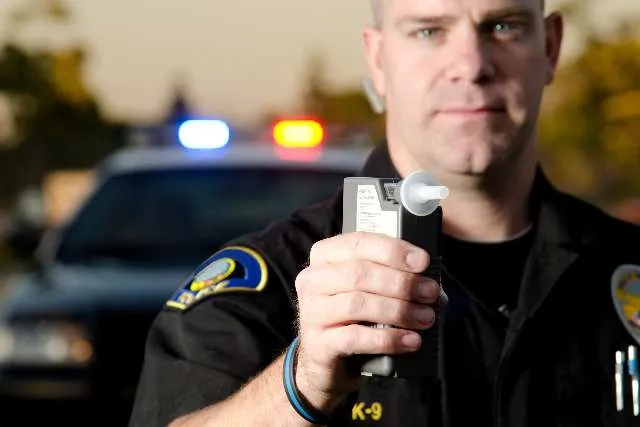 Sobriety checkpoints are legal in Missouri, but they must follow strict rules to comply with constitutional limits. Police must use a neutral system to stop vehicles, like stopping every third car, to avoid unfair or random enforcement. Checkpoints should be clearly marked and visible to drivers, causing minimal disruption to traffic.
Officers cannot hold you longer than necessary unless they notice clear signs of impairment, such as slurred speech, alcohol odor, or unusual behavior.
If police fail to follow these rules, any evidence they collect can be challenged in court and possibly excluded.
Your Legal Rights as a Driver
You can avoid a checkpoint by taking a different route in Missouri, as long as you don’t break traffic laws. You are not required to answer questions that could incriminate you at a checkpoint. The Fifth Amendment of the U.S. Constitution and Article I, § 19 of the Missouri Constitution protect you from self-incrimination.
You also have the right to refuse a search of your car or person unless the police have a valid warrant or probable cause, as protected under the Fourth Amendment and Article I, § 15 of the Missouri Constitution. While field sobriety tests (like walking in a straight line) are voluntary, chemical tests (such as breath, blood, or urine) are treated differently.
Under Missouri’s implied consent law, refusing a chemical test after arrest will result in a one-year license revocation, even if the DWI charge is not proven.
The Risks of Refusing a Test
Refusing a breath or blood test can have serious consequences. The Missouri Department of Revenue will trigger an automatic license revocation, separate from any criminal charges. To challenge this, you must request a hearing within 15 days of your arrest. If you miss this deadline, you may lose your driving privileges automatically.
Prosecutors may also use refusal as evidence of “consciousness of guilt,” which means a jury could view your refusal as an admission of wrongdoing. Understanding these risks is essential when deciding how to respond at a checkpoint.
How Carver & Associates Defends DWI Cases
Effective DWI defense requires more than legal knowledge—it demands experience in Springfield courts and relationships with local prosecutors and judges.
Our attorneys bring both.
Immediate License Protection
After a DWI arrest, you have just 15 days to request a hearing with the Missouri Department of Revenue to contest license suspension. Missing this deadline means automatic loss of driving privileges. We file immediately and represent you at these administrative hearings to preserve your ability to drive while your criminal case proceeds.
Challenging Evidence and Procedures
DWI convictions often hinge on whether police had probable cause for the traffic stop and whether chemical tests were properly administered. We investigate whether the arresting officer followed Missouri’s implied consent protocols, whether the breathalyzer was calibrated and maintained correctly, and whether any procedural errors occurred. Successfully suppressing evidence can lead to reduced or dismissed charges.
Greene County Court Knowledge
Each courthouse operates differently. Our attorneys know which Greene County judges emphasize procedural strictness versus sentencing flexibility, and which prosecutors are open to negotiating reduced charges like reckless driving. This local insight shapes our defense strategy from day one.
Negotiating Practical Outcomes
Not every case goes to trial. We advocate for alternatives that minimize impact on your life: probation instead of jail, restricted driving privileges with an ignition interlock device, or treatment program participation that reduces penalties. Decades of negotiating in Springfield courts give us the leverage to pursue these outcomes effectively.
Why Carver & Associates
45+ Years of Proven Experience. Thousands of cases won. Award-Winning Representation.
Over 45 Years of Proven Experience
Tom has been a pillar of the Springfield MO legal community for four decades. He has represented over 300 clients in federal cases and literally thousands of clients in Missouri state courts.
Five-Time Lawyer of the Year
Five-time designation by Best Lawyers as “Lawyer of the Year” in the area of criminal law in Springfield, Missouri among numerous other accolades..
A Track-Record of Successful Outcomes
Tom is a fierce advocate for his clients and is known for helping families obtain the best outcome possible. Sentence reductions, dismissals and death row reversals to name a few.

Frequently Asked Questions
What is the difference between DWI and DUI in Missouri?
Missouri uses only DWI (driving while intoxicated) for all impaired driving offenses. There is no separate DUI charge. Whether impairment involves alcohol, drugs, or both, the charge is DWI.
Can I refuse a breathalyzer test in Missouri?
You can refuse, but consequences are severe. Missouri’s implied consent law triggers an automatic one-year license revocation for refusal—separate from any criminal penalties. Prosecutors may also argue your refusal indicates guilt.
How long does a DWI stay on my record in Missouri?
A DWI conviction remains on your criminal record permanently in Missouri. For purposes of calculating repeat offenses and enhanced penalties, prior DWIs are counted within specific lookback periods.
Do I need a lawyer for a first-time DWI?
Yes. A first DWI creates a criminal record and sets the stage for harsher penalties if you face future charges. An experienced DWI lawyer can challenge evidence, negotiate reduced charges, and protect your driving privileges.
What does a DWI charge mean in Missouri?
In Missouri, driving while intoxicated (DWI) means operating a motor vehicle while impaired by alcohol or drugs. A driver can be charged if their blood alcohol concentration (BAC) is 0.08% or higher, if alcohol or drugs impair safe driving, or if they have a controlled substance in their system. Unlike other states, Missouri does not use the term DUI—all impaired driving charges fall under DWI laws.
What penalties can someone face for a DWI in Springfield?
Penalties depend on prior offenses and BAC level. A first offense, a Class B misdemeanor, can bring up to six months in jail, fines up to $500, a 30-day license suspension, and required completion of the Substance Abuse Traffic Offender Program (SATOP). A second offense can mean up to one year in jail, mandatory minimum jail time, and license revocation for one year. A third offense becomes a felony with up to four years in prison and a five-year license revocation. A fourth offense is an aggravated felony with up to seven years in prison and a 10-year license revocation.
How is DWI different from DUI in Missouri?
Many states use DUI and DWI interchangeably, but Missouri law only recognizes DWI. Whether caused by alcohol or drugs, all impaired driving offenses are prosecuted as DWI under RSMo § 577.010. This matters because penalties, license reinstatement procedures, and mandatory programs like SATOP are tied specifically to Missouri’s DWI framework. Understanding this distinction avoids confusion for both residents and out-of-state drivers.
What rights do drivers have at sobriety checkpoints in Missouri?
Sobriety checkpoints are legal but must follow constitutional limits. Police must stop vehicles according to a neutral plan, such as every third car, and the stop must be brief unless officers detect signs of impairment. Drivers may legally avoid a checkpoint by taking another route, refuse to answer incriminating questions, and decline a vehicle search unless police have probable cause or a warrant. Field sobriety tests are voluntary, but refusing a chemical test under Missouri’s implied consent law results in a one-year license revocation.
How can Carver & Associates help with a DWI case in Springfield?
Carver & Associates protects clients on multiple fronts. They immediately act to preserve driving privileges by requesting Department of Revenue hearings within the 15-day deadline. They challenge the legality of traffic stops, the accuracy of BAC tests, and procedural errors to weaken the prosecution’s case. Their deep knowledge of Greene County courts allows them to anticipate how judges and prosecutors approach cases, helping them negotiate for reduced charges or alternative penalties such as probation or limited driving privileges with an ignition interlock device. Their Springfield presence also ensures fast, responsive representation when unexpected hearings or evidence arise.
Contact Carver & Associates for DWI Cases in Springfield, MO
 If you’ve been arrested for DWI in Springfield, MO, your immediate decisions will shape your future. You do not have to navigate these challenges alone. We combine local insight, strategic defense tactics, and client-focused representation to fight aggressively on your behalf at every turn.
Our Springfield-based attorneys guide you from the day of your arrest to the conclusion of your case, challenging police procedures, scrutinizing every detail of your arrest, and negotiating for the best possible outcome.
Your decisions in the days following a DWI arrest shape your future. With the 15-day deadline to contest license suspension, time matters. Our Springfield DWI lawyers will review your arrest, identify weaknesses in the prosecution’s case, and build a defense strategy tailored to your situation.
Contact Carver & Associates today for a consultation. Let us protect your license, your record, and your future.
The Power of Experience
When your life is on the line, you don’t want to chance your future to a legal rookie. You need an advocate who has seen it all before and knows how to make the best out of a terrible situation.
Carver & Associates are not only experienced, but effective. Judicial matters can be complicated, and we are on hand to answer your questions and keep you informed on every aspect of your case. We take great pride in using our experience to benefit you.
Preserve your freedom and protect your name—schedule a confidential consultation with us. When you reach out, we are ready to listen, advise, and build your personalized defense.